
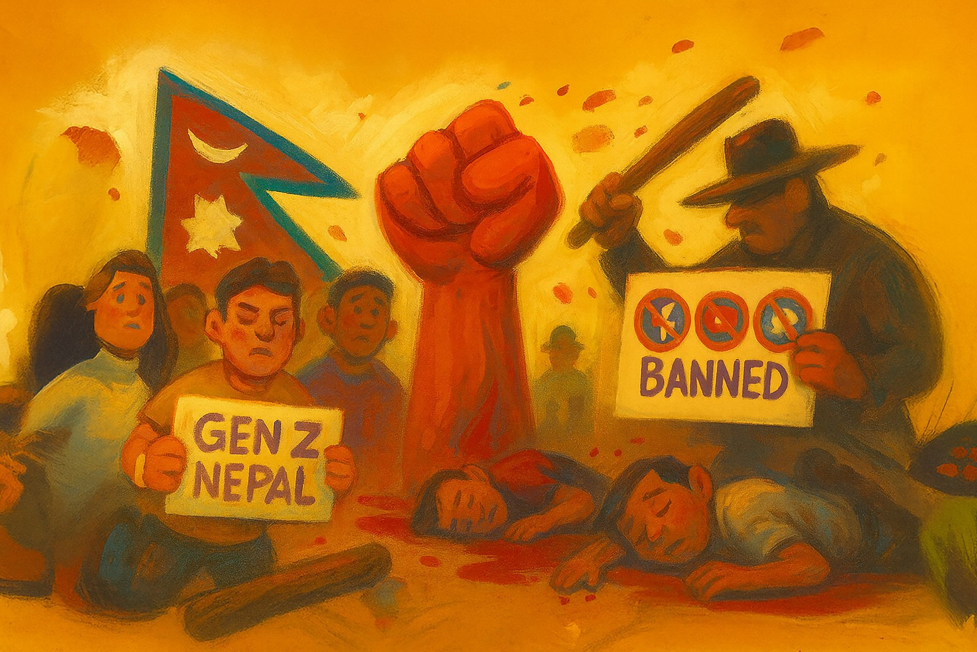
A Social Media Ban Sparks Nationwide Protests
— Nepal’s government issued a sweeping ban on 26 major social media platforms—including Facebook, X (formerly Twitter), and YouTube—after they failed to register with the government under a new regulatory mandate (AP News, Wikipedia).
While the intent was framed as combating fake identities and online harm, critics warned it could suppress dissent. The restrictions quickly ignited outrage, especially among Nepal’s digitally savvy youth.
“Gen Z” Takes to the Streets
By , tens of thousands of protestors—primarily from Generation Z—gathered across Kathmandu and other cities such as Pokhara, Butwal, and Bharatpur. The rallies were fueled not just by digital censorship, but also by growing frustrations over rampant corruption, economic inequality, and political stagnation (Wikipedia, Kathmandu Post, The Guardian).
However, what began as peaceful demonstrations escalated into chaos. Security forces responded with lethal force—employing rubber bullets, tear gas, water cannons, and ultimately live ammunition. Fatalities ranged from 17 to over 19 protestors, with hundreds injured (AP News, Reuters, The Guardian, Los Angeles Times, Kathmandu Post, Wikipedia).
Government Collapse and Army Intervention
- The social media ban was lifted amid the escalating violence (Reuters, Politico).
- Prime Minister KP Sharma Oli resigned, marking a dramatic collapse of political authority (Reuters, AP News, Al Jazeera).
- The Nepali Army was deployed to enforce curfews, patrol cities, and secure key locations—including the airport and government buildings (Reuters, AP News, Indiatimes, Al Jazeera, Wikipedia).
- Protestors proposed former Chief Justice Sushila Karki as a transitional leader, highlighting the demand for credible and impartial governance (AP News).
Broader Carnage and Impact
- Government buildings—including the Parliament, Supreme Court, and presidential residence—were gutted by fire. Even the Hilton Hotel in Kathmandu was torched (Indiatimes, Al Jazeera, The Indian Express, Hindustan Times, mint).
- Popular tourist destinations saw rising chaos. Indian tourists were stranded; Indian states like Andhra Pradesh and Rajasthan activated emergency cells to assist their citizens stuck in Nepal (Indiatimes, The Times of India, Hindustan Times).
- Border regions and tourism-linked towns faced disruptions—evidencing significant economic strain on cross-border traffic and local businesses (The Times of India, Hindustan Times).
- The UN High Commissioner for Human Rights and India’s external affairs ministry both issued calls for restraint and dialogue (Hindustan Times, Reuters).
What’s Next for Nepal?
As of :
- Casualty estimates have climbed to 30 dead and over 1,000 injured according to Nepal’s health ministry, underlining the crisis’ severity (Hindustan Times).
- Army Chief Ashok Raj Sigdel has begun negotiations with protest representatives, and President Ram Chandra Poudel is expected to meet with Gen Z leaders to facilitate dialogue (mint, Hindustan Times).
- Protesters continue to press for systemic change, while the government and military work to stabilize the situation.